Pistachio Ice Cream Case – A Toxic Scoop of Arsenic
20th January, 1993. Germany, Tamm-Hohenstange. Anna B.’s aunt visits her family on a Wednesday. As Anna’s parents head out for the day, aunt and niece spend the rest of the day together. They walk Elisabeth’s three french bull dogs and immediately afterwards, Anna receives the present her aunt has brought her: a package of pistachio ice cream. It would be the last sweet Anna would ever eat as her aunt would turn out to be the most likely person to have poisoned her ice cream.

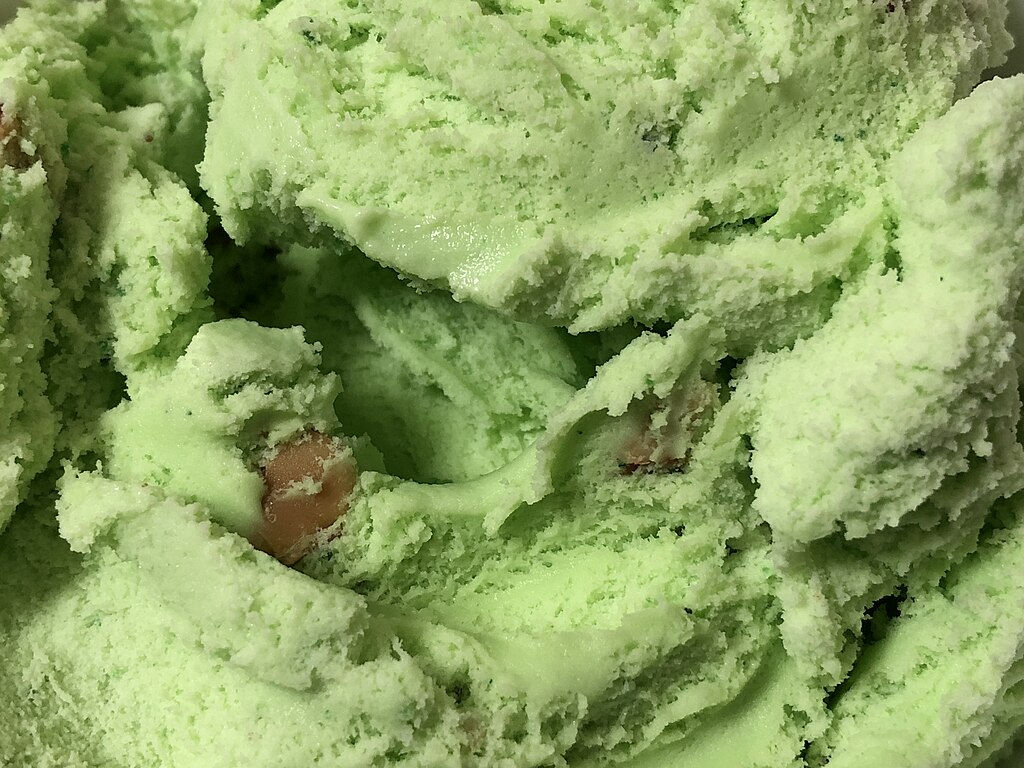
Exemplary picture of pistachio ice cream. Unrelated to the case.
Family Visit
Anna’s family lived quietly in Tamm-Hohenstange, a small, peaceful community near Ludwigsburg, southwest Germany. They awaited a visit from Elisabeth F., Anna’s paternal godmother from Königstein, sister of Anna’s father Ernst-Rudolf. Elisabeth F. was married but childless and like her brother, she came from a wealthy apothecary family. As for the reason for her visit, Elisabeth had argued she wanted to take one of her dogs to a vet in Stuttgart.
Seven-year-old Anna looked forward to seeing her aunt. She admired Elisabeth, her three french bulldogs and her white Porsche. The little girl especially looked forward to the small present the aunt wanted to give her: a package of pistachio ice cream from the supermarket.
The child’s parents headed out for a religious speech of their congregation, leaving the task of taking care of Anna to her aunt. After school, Anna returned home, greeted her aunt, took her three french bulldogs for a walk and ate the promised ice cream together with Elisabeth. Little did Anna know it would be the last present she would ever receive. At 9 p.m., Anna cited her last prayer: She was thankful for the great day, asked for protection of her loved ones and went to sleep, completely unaware that a night of hellish pain would awaken her in a few hours.
A Sweet Treat Turns Deadly
When the parents returned home, ordered and ate pizza together with Elisabeth, Anna called them from her room at 10 p.m. The little girl felt unwell and asked her parents not to be mad at aunt Elisabeth as she was the one who allowed her to eat too much ice cream. To alleviate her pain, the adults gave her black tea and “Uzara”, a herbal remedy for diarrhea. Anna slept in her parents bed for the night. The night was a painful one: She was plagued by diarrhea and had to vomit every fifteen minutes. Her father gave her charcoal tablets but to no avail. Anna passed out in the morning at 7 a.m. Immediately, her parents and Elisabeth took her to a pediatrist who was still closed at the early hour. As a result, the family drove to a clinic in Ludwigsburg. The little girl didn’t make it. Only a few hours later, Anna is proclaimed dead, raising the question of what exactly was her cause of death.
Investigation and Main Suspect
Against Anna’s mother’s objection, an autopsy was conducted. It revealed a lethal dose of arsenic in Anna’s body – a dose that would have sufficed to kill twenty children. During their investigation, police failed to secure the groceries which Anna’s mother threw out. The groceries could have been examined for remains of poison. As a consequence, the pistachio ice cream being poisoned is based on assumption.
Quickly, the main suspect is ruled to be Anna’s godmother Elisabeth. A few things point to her having a hand in Anna’s poisoning. While Anna was fighting for her life, Elisabeth drove away in a taxi to pick up her ill french bulldog. As soon as she had taken her pet to the vet, she calmly went back to the family’s home in Tamm-Hohenstange to shower, get dressed and to put on makeup. When confronted with Anna’s death, she made an odd statement. Elisabeth claimed she had run the dishwasher with the ice cream bowls even though the dishwasher was only half full. Furthermore, Elisabeth had studied pharmacy and chemistry but never finished her studies, making it possible for her to know about poison.
The official medical report stated that arsenic was consumed between 8 and 9 p.m., approximately the time frame where Anna and Elisabeth had eaten the ice cream. In addition, the current owner of the apothecary which once belonged to Anna’s family claimed he had found 2 bottles of arsenic as old stock. At the time, Elisabeth and Anna’s father both still had access to the apothecary, which could possibly explain the arsenic’s origin.
During the investigation process, all three adults acted suspicious. They all stuck together and claimed none of them could have done it. As a result, search warrants were executed, the family telephone monitored, neighbors and doctors were interrogated but no concrete evidence could be found.
Unsolved
In autumn 1995, a trial was held in Stuttgart. Its verdict: Elisabeth was sentenced to life imprisonment due to insidious murder. Her defenders appealed against said sentence two times until in 1999, the sentence was revoked due to lack of evidence. And with its revocation, Anna’s case went cold.
Elisabeth F. died a couple of years ago due to her lymph gland cancer, leaving many unanswered questions behind. After their daughter’s death, Anna’s parents moved away to Franken and as of today, have started a new life. A life without Anna. Anna, whose case remains still unsolved. Anna, the girl who will be remembered to have died because of a toxic scoop of pistachio ice cream.
Sources:
https://www.hrr-strafrecht.de/hrr/1/98/1-171-98.php3
https://de.wikipedia.org/wiki/Pistazieneisfall
https://www.stuttgarter-zeitung.de/inhalt.der-mordfall-anna-b-ungeloestes-raetsel.0d080e49-844d-457c-a1b4-e71f223ace50.html
Discover more from Mystery Chamber
Subscribe to get the latest posts sent to your email.